

How To Track A Deer With No Blood
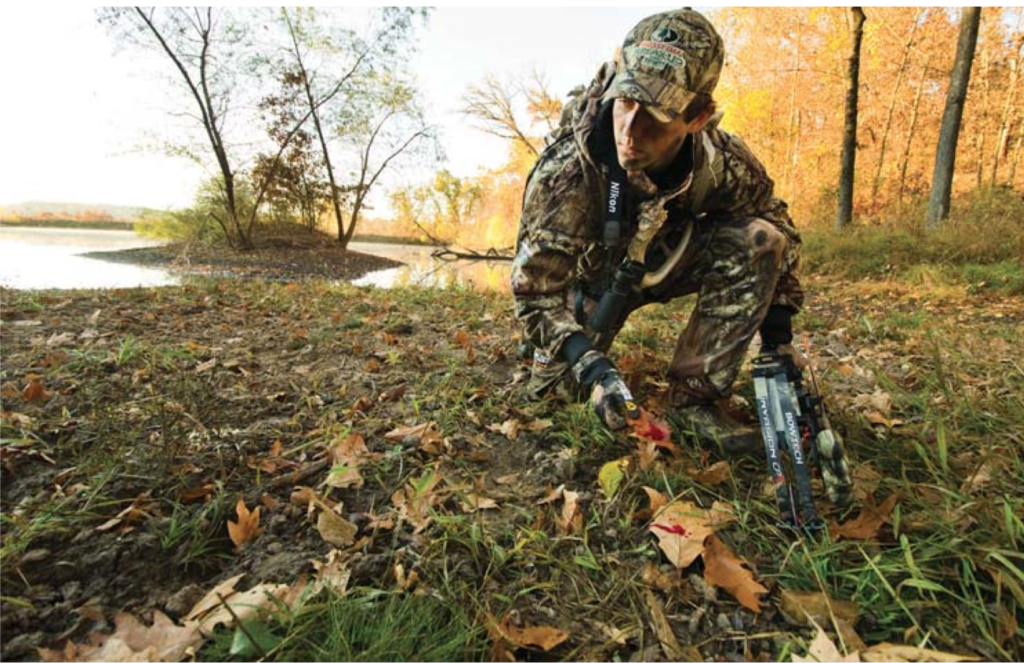
If the obvious claret trail ends later you shoot a deer, don't requite upward hope. Abaft may go tougher simply you can nevertheless find the deer with determination and understanding why the blood stopped.
Nothing beats a downed deer at the end of a blood trail. You know how information technology goes. You follow the blood for a few minutes, and suddenly you meet it. No more claret to search for, no more than tracking and no more wondering whether you'll notice the deer.
All the same, nosotros know in that location can be another side of the story. The blood stops with no deer at the stop of the trail, and the tracking becomes more difficult.
I become very concerned when a claret a trail comes to a screeching halt. All of a sudden, anxiety sets in. An insecure feeling comes over me as my conviction dwindles.
All the same, lack of claret doesn't necessarily hateful you won't recover a wounded deer. In fact, that'due south the all-time time to believe, "It ain't over till it'southward over." The going might get tougher, only you lot tin can even so find the deer. That possibility increases if you have a sound understanding of why the blood stopped.
Why Blood Ends
Although there are several reasons why a blood trail ends, let'southward accost the worst news outset. Superficial muscle wounds that might event in extreme blood loss the first 200 yards or then frequently coagulate. Coagulation reduces the corporeality of blood reaching the ground. It might happen when a deer is wounded in the leg, cervix or even the shoulder when the lungs are spared.

Then there are loftier wounds, such equally those on the top of the back. Such a wound almost always results in very little claret reaching the footing and eventually tapers to nothing.
I'yard not suggesting you don't continue searching for a downed deer because the claret stopped and you lot think information technology's the result of a muscle wound or high hit. The search should continue until you've done everything possible to recover the deer—after the blood trail ends.
Some wounds result in a downed deer although the claret trail suddenly stops. Consider the gut shot. A wound to the stomach or intestines often begins with blood y'all tin can follow, only that claret and so diminishes. It might completely stop or decrease to a drop of blood every 20 yards. Entry and departure holes often go clogged with tissue, which prevents external bleeding. It's also true that a wound to the paunch does not bleed every bit heavily as a wound to musculus.
Besides consider a high wound that hits the liver. Bleeding might exist primarily internal. The aforementioned theory applies if an pointer or projectile doesn't penetrate completely. Less blood reaches the footing when there is no difference hole. The signal: If the blood stops, a deer might still be downward.
Still, validate that determination earlier assuming the claret trail has ended and that you must go on an all-out-search for a downed deer.
Backtracking and Verification
Claret trails vary. Some you lot can come across easily and follow chop-chop. Others are difficult to follow and strength you to motion slowly. If the like shooting fish in a barrel-to-follow trail stops cold, first consider that the claret has not stopped. Mayhap the deer made a sudden turn or went back the way it came. Always consider post-obit the track back from where you came to run into if the deer has retreated. Wounded deer often practise that, particularly if they know they're being followed. They will walk back along their trail, looking to run across if you are in pursuit.
Hard-to-follow trails that of a sudden stop cold might point the blood has ended. Any blood trail that tapers or results in just a driblet of blood every few yards is often doomed to end. This is the time to go down on all fours. You'll exist surprised how much more than blood you can discover when you're close to the ground. Pin-sized drops are seldom spotted from an upright position.
Sometimes, tracking from a crawling position volition go you several more than yards ahead. If that doesn't pay off and yous have confirmed the claret has stopped, it's fourth dimension to first looking for blood in other places — or for a downed deer.
Where to Look
If yous cannot find whatsoever more blood along the trail you lot followed, don't assume the blood has totally stopped. In almost every instance of post-obit a wounded deer in which the blood runs out, I nearly always notice blood again somewhere ahead if I search the most probable areas.
Allow'due south face it: Following a trail without blood is nigh impossible. Sure, you lot can begin by searching for additional sign, such as hoof marks if the deer is leaving tracks. Alternatively, yous might spot curled leaves where the deer'due south hoofs have walked in forest or find debris to the sides of tracks as the deer ran. However, if there's no blood, it becomes more hard the farther you track. Eventually, that telltale sign expires or interferes with sign left by other deer that passed through the area.
Thus, when the tracking ends, it's time to expand the search. After determining the general management the deer traveled, begin past walking any deer trails nearby. Wounded deer that walk near e'er follow trails. Follow them for no less than fifty yards. Information technology only takes a small-scale drop of claret to become you back on track. I can't tell you how many times I have lost a blood trail only to pick up but one more drib an hr and 100 yards ahead.
You lot also should search ditch and creek banks for fresh tracks where deer have crossed. Many wounded deer that seemingly stop bleeding externally will leave more blood after traveling uphill or up a steep bank. If you locate fresh tracks where a deer has crossed a creek or ditch, expect closely on acme for several yards to see if more blood appears. It'due south common for a wounded deer to seek a hideout — a sanctuary to bed downwards. Whenever I lose a claret trail and expand my search, I always search every thicket nearby. I'm non suggesting y'all break abroad from your trail and walk hundreds of yards to become to a thicket to look for a wounded deer — at least not however. But when you lose the blood and look ahead without achieving positive results, always take a peek in bramble-bush thickets, dense areas of honeysuckle and around logjams.
When a wounded deer seeks a identify to bed down, information technology ofttimes uses the thickest bachelor cover. Some volition lay down and lookout man their back trail. Almost will non penetrate deep into the thicket. Typically, they volition go inside a thicket only a curt altitude to bed. Deer nearly never penetrate far into extremely dense areas. Though it wants to hide, a wounded deer will always want an escape route. Areas that are infested with thick briars or logjams are not appealing if the deer cannot become up and easily run out the contrary side.
The reason you lot should always proceed searching for i more drop of blood is elementary: The less distance you lot take betwixt that driblet and the downed deer increases your chances of finding it.
The Eleventh-Hour Search
If all efforts neglect to locate another drop of blood and it comes downwardly to finding a downed deer, always seek assistance. Granted, quiet tracking with only one or two other hunters is ordinarily best. Withal, if your only hope is to spot the deer, it'southward better to have more eyes looking.
A good place to first searching is where the blood trail ends. Using a zigzag pattern is very beneficial and lets you lot to embrace the expanse extensively. In the direction the deer was traveling, movement to the left for a brusque distance and and then back to the right. The more than open the area, the farther yous should expand the zigzag routine. Expand the zigzag search the further you get from the last drop of blood. In other words, when you begin, consider a 75- or 100-yard search to the left and right of the concluding blood. As you increase the altitude from the concluding blood, broaden your zigzag search to the left and correct by 150 to 200 yards.
Finally, e'er consider that a downed deer might be visible only when you lot walk a certain direction. In many cases, you'll run across the white belly starting time. Yet, if you walk one direction and the deer's belly faces the reverse direction, you might non see the deer until you lot walk back.
Leave no stone unturned. Catastrophe the search before you've checked every possibility could cost yous.
Here are two assumptions you should always consider: Starting time, never assume that you lot can't recover a deer when the claret stops. Second, never presume that a lot of blood volition lead to a downed deer. Both facts will assist you go a better tracker and brand sure you put your best endeavor into recovering a wounded deer.

Source: https://www.deeranddeerhunting.com/deer-hunt/deer-hunting-tips/the-best-tips-for-tracking-deer-when-the-blood-trail-stops
0 Response to "How To Track A Deer With No Blood"
Post a Comment