

How To Pass Object In Soap Web Service Request
This folio provides information on REST requests in SoapUI Open Source. For information on working with SOAP requests and WSDL specifications, see Working With WSDLs.
What Are Rest Requests?
REST is a simple concept considering it follows the HTTP i.i language that the entire Web understands. Everything in the RESTful architecture is about resources. You specify a resource in the URL of your asking. For instance, in the post-obit URL –
http://mypetsore.com/pet/124
– the /pet/124 office is a resource located on the mypetstore.com server.
The action that yous are going to do on with a resource is fix by the method (verb) written in upper case at the request start line. For example, the following asking get-go line –
GET http://mypetstore.com/pets/124 HTTP i.1
– means you are going to receive information on a pet with the id 124.
Here are a few more than examples for the Swagger Petstore sample API:
-
Mail …/pet/{petId}/uploadImage– Uploads a new image of the pet specified by its id. -
PUT …/pet/{petId}– Updates information on the specified pet on the server. -
DELETE …/pet/{petId}– Removes data on the specified pet from the service.
The most frequently used methods are GET, POST, UPDATE, PUT and DELETE. Other methods, like Head or PATCH, are also possible but non used as often. For more information on REST methods, see Understanding Residual & Soap Request Methods.
The resource URL, headers and body (which is called payload) tin include additional request parameters and data.
Rest API Formats
The resource names, their hierarchy and parameters, supported methods, payload formats are not strictly defined. Technically, they should match the HTTP protocol, merely the actual format to be used is yours. For instance, some servers use the PUT method for the update requests, while some others utilise PATCH or UPDATE. Some APIs utilise JSON format for payloads, while some others use XML, or support both. To provide consumers of our API with information on available resources, methods, parameters and information formats, you may want to create your API specification.
SoapUI Open Source supports the WADL and Swagger formats of RESTful API specifications.ReadyAPIbesides supports WADL and Swagger formats and introduces support for OpenAPI three.0 and RAML.
How to Brand REST Requests
To make an capricious REST request and view the response, utilize the Endpoint Explorer dialog.
To ensure your API works properly, create functional tests that send requests to your API resources and validate responses. To learn more virtually it, see the REST Getting Started Tutorial.
If you'd like a more than detailed guide to working with RESTful APIs, download our due east-volume: Balance 101: The Beginner'southward Guide to Using and Testing RESTful APIs.
View REST requests in SoapUI editors
SoapUI parses the Remainder messages for y'all, and makes information technology very easy to view and edit the asking and response headers as well every bit the JSON and XML payloads.
To view request contents in SoapUI, merely double-click the request in the Navigator panel on the left:

The editor toolbar displays the request method (verb), endpoint and resources names, and query parameters. The left role of the editor displays the request contents, the correct role displays response information.
Asking View
This view displays a tabular array of the request parameters that are specified in the resource path, query cord or headers. You tin add and delete parameters, change their values and names in the table:
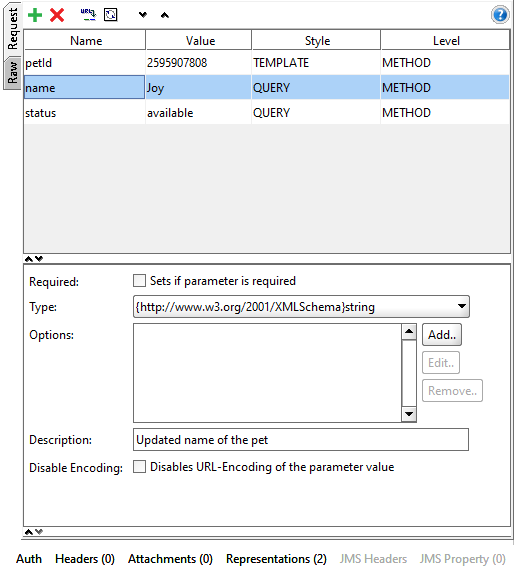
The Style attribute indicates the parameter type (where it is transferred to the server in the request URL or headers). For more than data on this, come across Agreement REST Parameters.
Level specifies whether the parameter is added to the resource or to requests only. If the parameter is added a resource, all the methods and requests below the resource node in the Navigator will get this parameter.
If a asking uses the Postal service, PUT or another method that sends data to the server, SoapUI will brandish an editor for the message trunk contents:
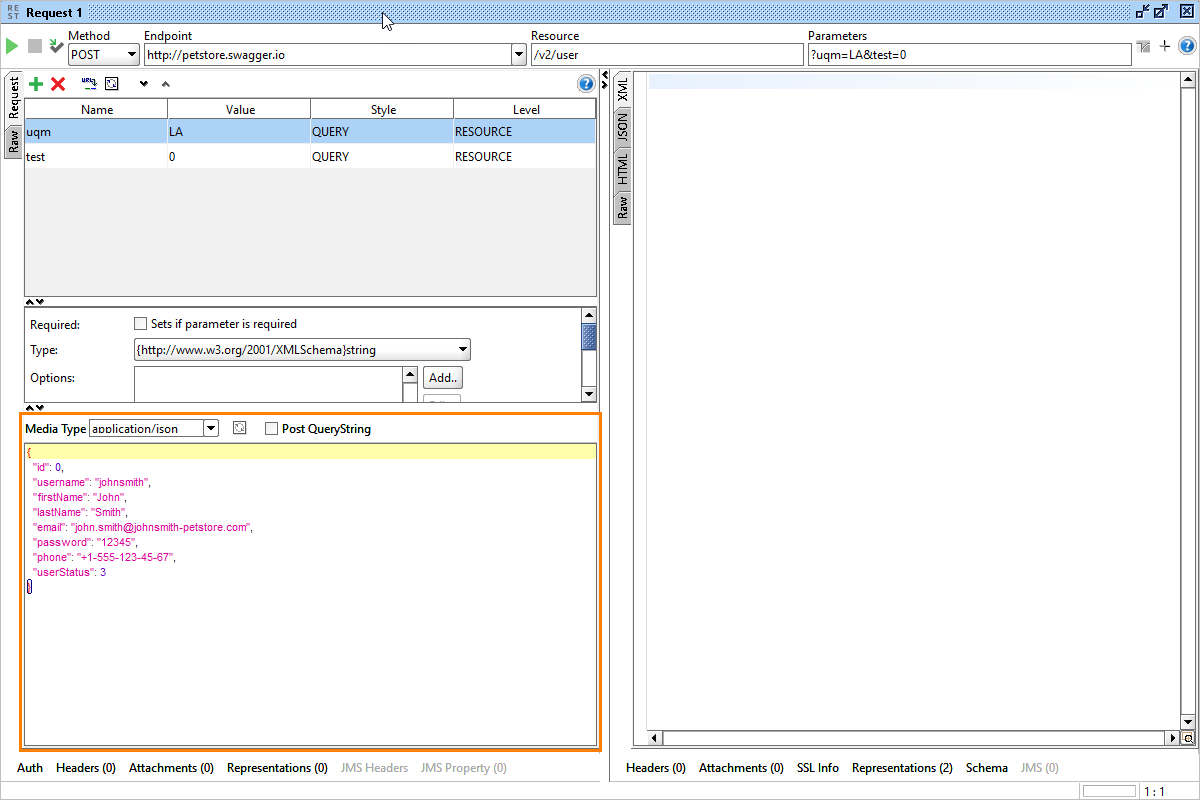
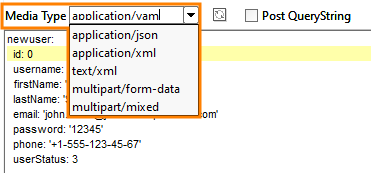
The Media Type box provides a number of standard media types for the asking trunk, but you are free to enter any other value instead:
If the request has an XML schema definition, you tin can click the  Recreate button to generate a new payload according to the schema.
For information on how to insert the payload contents from a file, run across below.
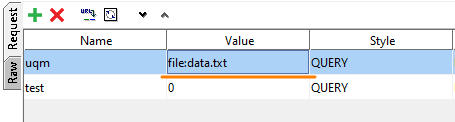
If you want to simulate the submit of an HTML Form using the multipart/course-data content-blazon you lot can specify individual parameter values to exist read from a file by setting their value to file: which will insert the file into the approachable asking:
Outline View (available in ReadyAPI merely)
This view makes it easier to piece of work with payloads that take circuitous JSON or XML information structures. It shows a tree-view over the message body (only applicative for Postal service and PUT requests). For example, the following structure in the message trunk will result in the following Outline view:

Form View (available in ReadyAPI only)
Provides a nicer and more convenient input form for both request parameters and message body data:
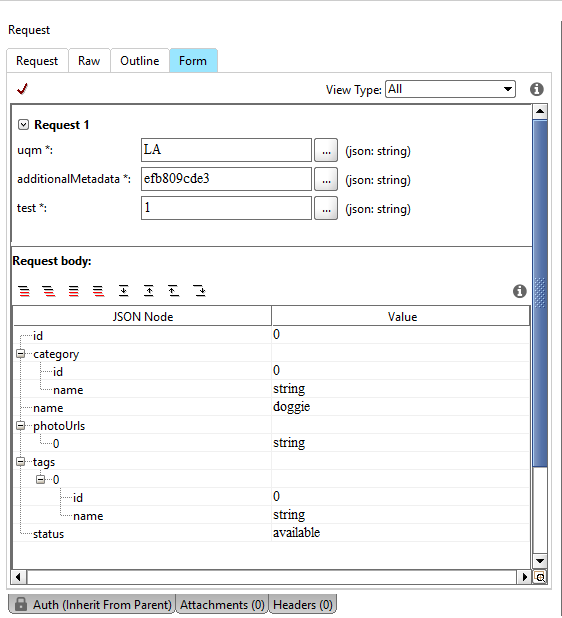
The ellipsis push opens a bill of fare that helps you lot apace insert project, test suite or exam case properties into request parameters.
RAW View
This tab displays the raw data of the last fake asking, something like this –
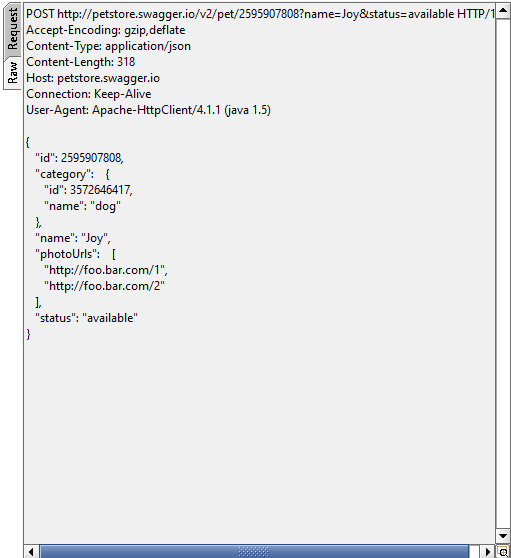
Request Editor Tabs
Auth
Contains authentication settings for a request:

SoapUI supports the post-obit hallmark types:
| Authentication Blazon | SoapUI Open Source | ReadyAPI |
|---|---|---|
| Basic |  | |
| NTLM | | |
| SPNEGO/Kerberos | | |
| OAuth 1.0 | | |
| OAuth 2.0 | | |
| OAuth 2.0 (Azure) | | |
| Digest | |
For more data on authentication settings, please run across ReadyAPI documentation.
Headers
Displays a list of custom headers to be added to the asking. Employ the toolbar items to add together new custom headers or delete existing ones. For example, the post-obit items in the tab –
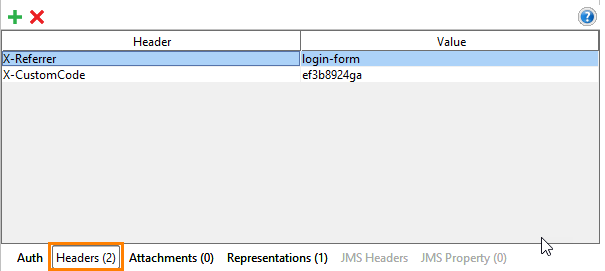
– volition result in the following faux request:
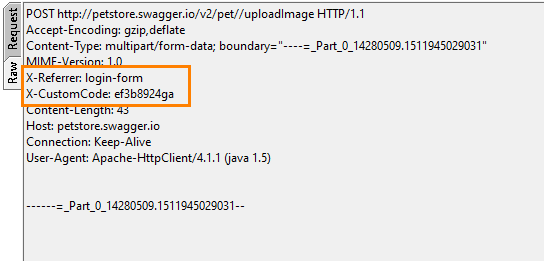
Attachments
Contains files to be attached to the simulated request as MIME attachments. If you want to include the content of a file as a asking parameter when simulating an HTML multipart/grade-data request, and then specify that parameter value as file:file-name . For example:
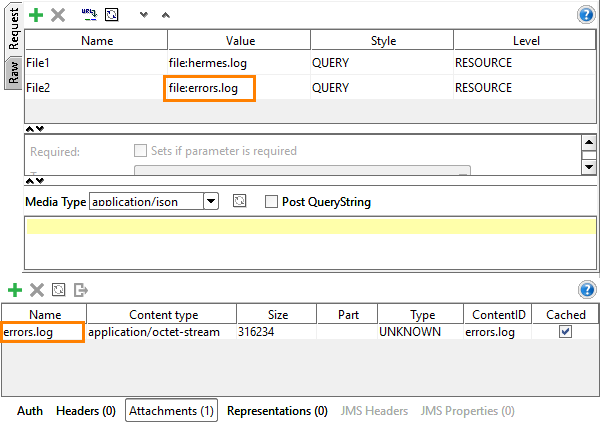
On the prototype above, y'all can see the asking that has 2 parameters both specifying file. The first simply refers to a file in the file organization (hermes.log), and the second refers to an attachment (error.log). If y'all set the Media Type to multipart/form-data and select the Post QueryString bank check box in the payload section, SoapUI will ship the faux request as if it were a HTML Class with corresponding file input fields.
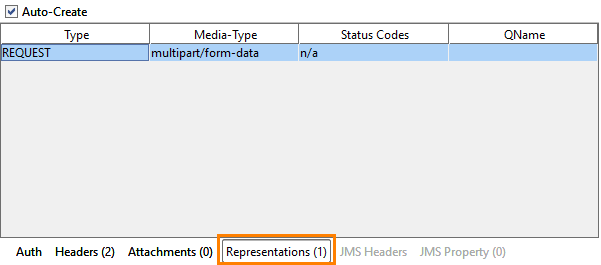
Representations
Shows request representations defined for the underlying Residual method:
SoupUI Open Source
- Basic unit reporting.
- Avant-garde reporting.
- Native CI/CD integrations to automate test reporting.
SoupUI Pro
- Bones unit of measurement reporting.
- Avant-garde reporting.
- Native CI/CD integrations to automate test reporting.
Response Views
The response editor contains several views for visualizing different types of responses:
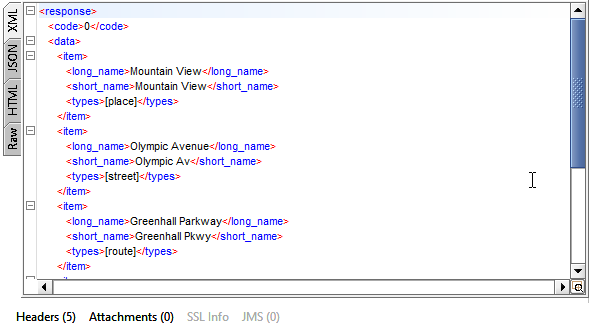
XML
Shows the electric current response in XML format. SoapUI volition endeavour to convert HTML responses to XML so they tin be used in Property Transfer test steps and scripts only like whatever other response messages in your functional tests.
JSON
Displays a formatted JSON response (if applicable): 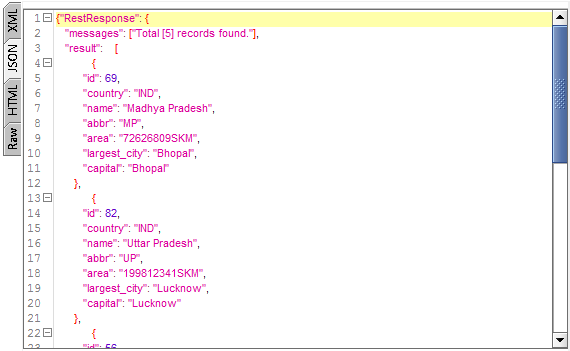
HTML
Renders a web page, if the response contains HTML data:
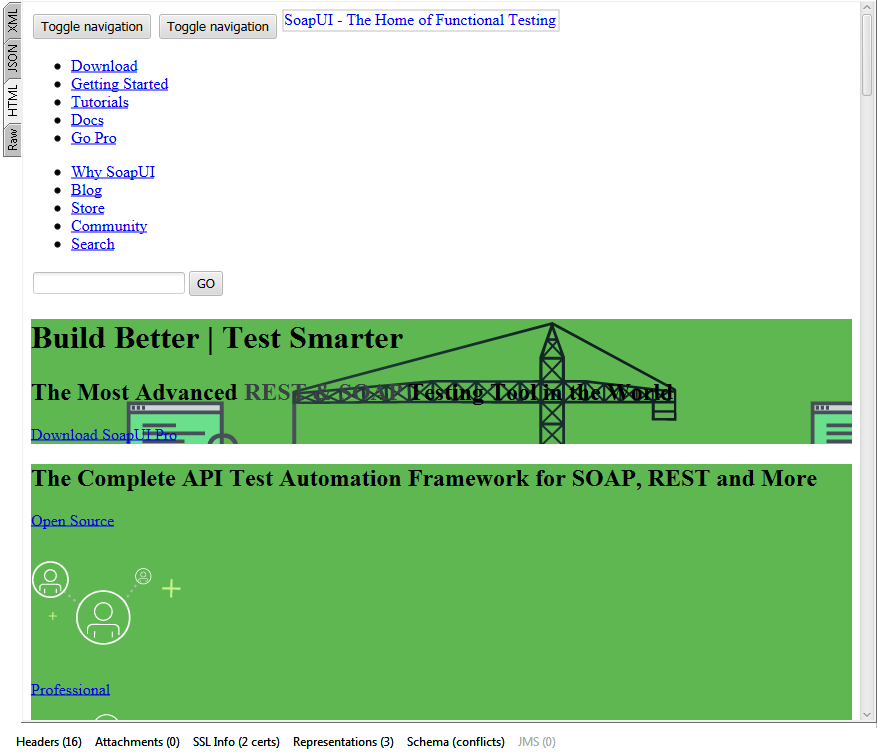
To display the HTML data, SoapUI uses a Browser component. On some platforms, this component can be disabled, and y'all will become the "Browser Component Disabled" bulletin.
Raw
Shows the raw bytes of the response. For an HTML folio, this view contains the post-obit:
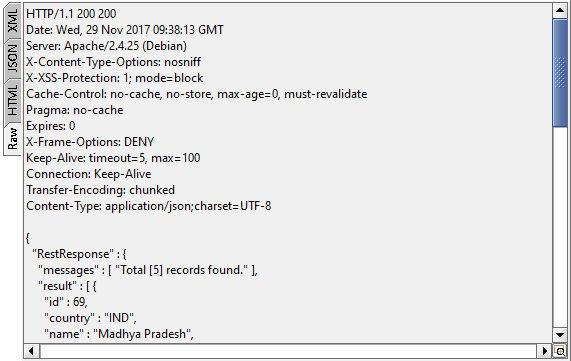
Outline (bachelor in ReadyAPI)
A tree-similar structure of JSON or XML response information:
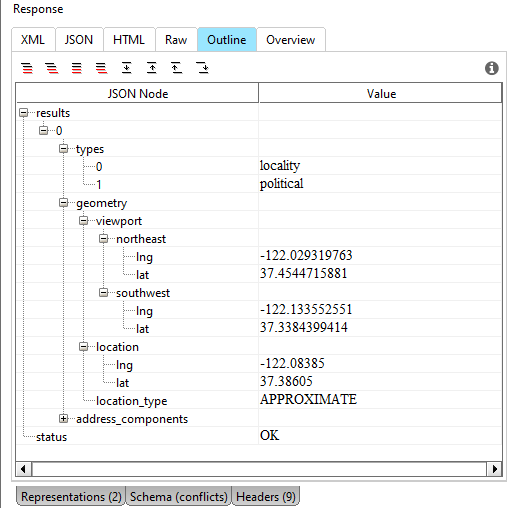
Overview (bachelor in ReadyAPI)
Ane more than easy-to-read view of the JSON and XML payload:
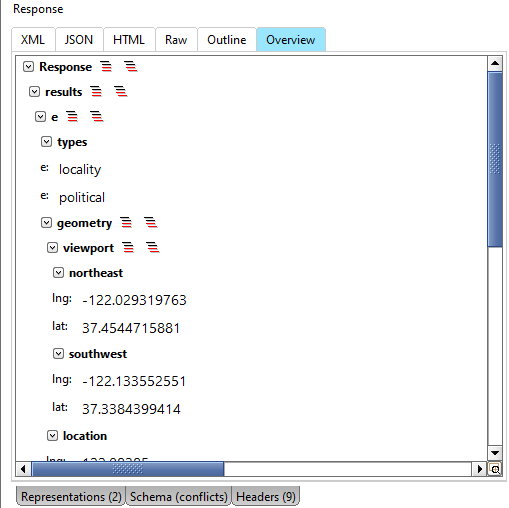
URLs are opened in the system browser.
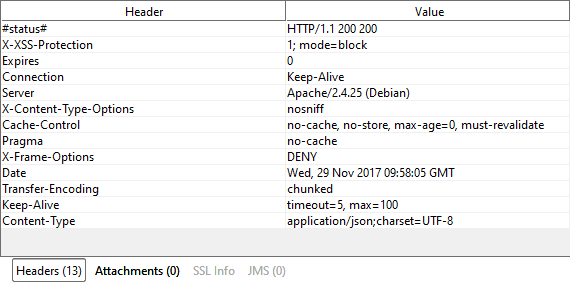
Headers
Displays response headers:
Attachments
Contains all MIME attachments returned by the response.
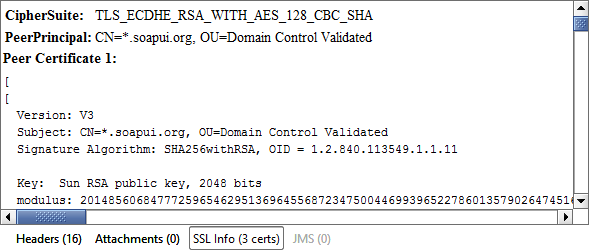
SSL-Info
If a asking was send over an SSL connection (that is, to an https://… resources), this view will show detailed information on the security certificates and certificate chain of the target server:
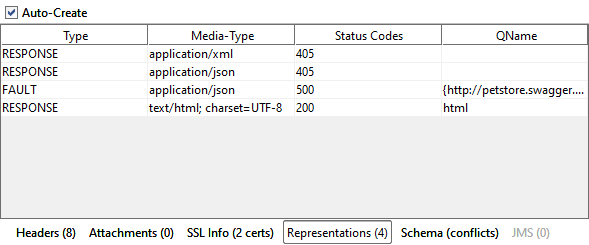
Representations
Shows the currently defined response representations for the simulated request:
Schema
You lot utilise this page to generate XML schema from the returned response. For more information on this, see Schema Inference in ReadyAPI documentation:
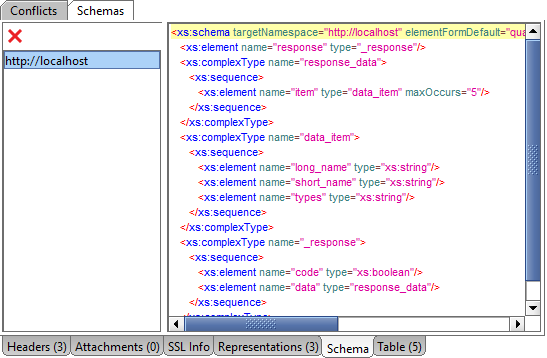
Table (available in ReadyAPI)
Displays child elements of the currently selected chemical element in the XML or JSON view every bit a table:
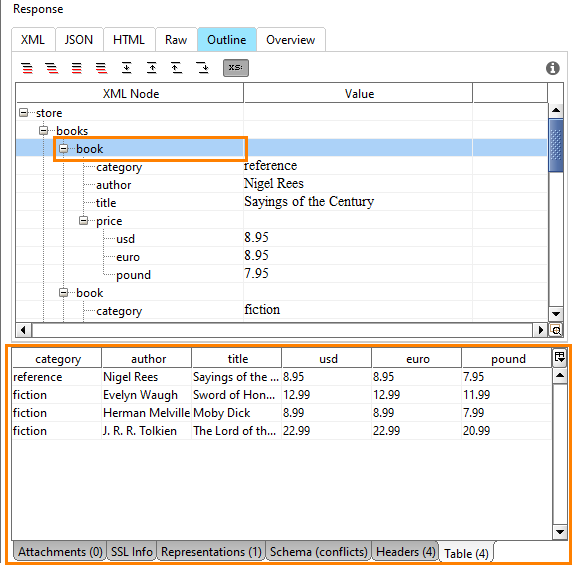
On the image above, the books element contains a series of child volume elements of the aforementioned structure. ReadyAPI displays these elements as a table to brand it easier to view and clarify them.
Next Steps
REST Cheat Sheet
REST Testing Tutorial
Soap vs. Rest 101: Understand the Differences
Balance Resources and Methods
Mocking Balance Services

How To Pass Object In Soap Web Service Request,
Source: https://www.soapui.org/docs/rest-testing/working-with-rest-requests/
Posted by: lukensorms1986.blogspot.com
0 Response to "How To Pass Object In Soap Web Service Request"
Post a Comment